
Frozen chicken parts can overlap, jam during filling, and leave packs overweight. These problems slow production even when the packaging machine itself runs well.
We build a frozen chicken parts packaging line around controlled feeding, belt combination weighing, and coordinated filling. The right setup depends on chicken size, surface condition, target weight, and whether the product goes into premade pouches, VFFS bags, or lined cartons.
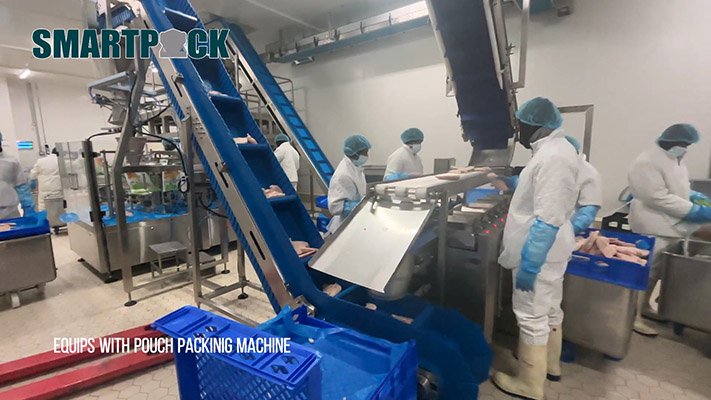
At Smart Weigh Indonesia, we start with how your chicken moves through the line.
When Is a Belt Combination Weigher Suitable for Frozen Chicken Parts?
A machine that handles small chicken pieces may struggle with large thighs. We check the product before deciding how to feed and weigh it.
We consider belt combination weighing when irregular shapes, large pieces, or difficult discharge make product handling a priority. Moving belts carry selected portions forward, but suitability still depends on trials with the actual chicken parts.
Check Shape and Surface Condition
We ask for wings, drumsticks, and thighs to be assessed separately. Wings can overlap. Drumsticks can roll. Broad thighs need enough belt width and clearance to move without catching on guides.
We also distinguish dry, individually frozen pieces from products with surface moisture. Both may be described as frozen chicken, but their feeding behavior can differ.
If pieces arrive frozen together, we discuss separation upstream. A combination weigher cannot reliably turn a solid cluster into individual portions.
Compare the Available Weighing Options
We may also consider a hopper multihead weigher for smaller, freely flowing IQF pieces. We compare feeding consistency, discharge reliability, cleaning access, and available space.
Our belt combination design uses active belt movement and short transfers. We still check the full route to the package, because a gentle transfer at the weigher does not remove a long drop further downstream.
How Does the Line Move Chicken Parts from Feeding to Finished Packs?
Uncontrolled feeding creates problems before weighing begins. We need enough product available for combinations without burying the weighing belts under a pile of chicken.
We coordinate product feeding, distribution, weighing, collection, and package filling. Each weighed portion moves forward only when the receiving equipment is ready. Sealing or carton closing follows, with inspection arranged for the selected package.
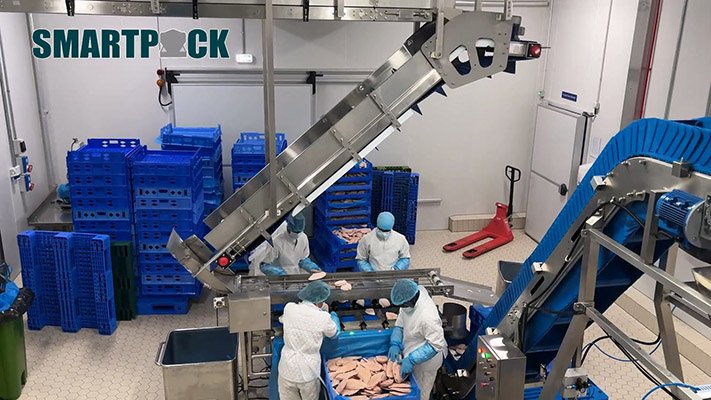
Feed and Distribute the Chicken
We select the infeed conveyor around product size and the upstream process. We then decide whether automatic distribution or operator-assisted loading gives more reliable placement on the weighing belts.
This distinction matters when planning labor. A belt combination weigher does not automatically mean every feeding task is unmanned.
Each weighing belt needs a useful portion. We adjust distribution so some belts do not remain empty while others carry excessive loads.
Release Each Batch at the Right Time
The controller selects a combination of measured portions near the target weight. The selected belts transfer those portions onto the collection conveyor.
We coordinate conveyor movement and discharge timing to keep consecutive batches separate.
We then arrange weight checks and any required foreign-body inspection. We select the inspection position around product depth, package material, and the factory’s detection requirements.
How Do Piece Size and Target Pack Weight Affect Weighing Performance?
A precise weight reading does not guarantee a close final pack weight. We also need combinations that can reach the target using whole chicken pieces.
We evaluate weighing performance through piece-weight variation, the portions available on each belt, and the permitted pack-weight range. Large pieces can limit the available combinations, especially when the target pack contains only a few pieces.
Whole Pieces Limit the Available Choices
Suppose a batch is below target and the smallest available extra portion takes it well above target. The controller cannot remove part of a drumstick. It needs a different combination or a new portion.
We therefore separate measurement accuracy from actual pack-weight results.
We also ask whether the requirement is weight only. A pack that must contain a fixed number of drumsticks, or a particular mix of wings and thighs, needs additional control.
Keep Feeding Balanced
We adjust belt loading to provide useful choices. Heavy loads on every belt can restrict combinations, while too many empty belts can slow batch formation.
During trials, we record average pack weight, weight variation, rejected packs, and completed packs per minute. We assess these results together.
Should You Use Premade Pouches, VFFS Machine or Carton Machine?
The packaging format changes more than the final appearance. We must also change how the chicken enters the pack and how each batch is supported.
We match premade pouch equipment to ready-made bags, VFFS equipment to bags formed from roll film, and carton equipment to the intended box workflow. Direct filling into lined cartons and packing sealed bags into outer cases require different systems.
Premade Pouches
We consider premade pouch machines when the factory already uses a defined retail bag. We check the usable opening after the grippers hold the pouch, because nominal bag width alone does not show the filling clearance.
We also check whether the loaded pouch needs bottom support. Heavy chicken pieces should enter without pulling the bag out of position or leaving product in the sealing area.
VFFS Bags
We consider VFFS when the project uses roll film and a suitable pillow bag format. We size the forming tube and filling path around the largest chicken piece and the volume of a complete batch.
For bone-in products, we request film trials to assess puncture resistance.
Cartons and Cases
We clarify the carton requirement before selecting equipment:
| Intended pack | Required workflow |
|---|---|
| Loose chicken in a lined carton | Carton forming, liner preparation, weighed filling, liner closing, carton sealing |
| Sealed bags inside an outer case | Bag packing, bag counting or grouping, case loading, case sealing |
For direct carton filling, we check liner opening, carton positioning, and batch distribution. We may need several weighed discharges for one carton, depending on its target weight and the weigher’s capacity.
What Keeps the Line Running Reliably in a Frozen Food Workshop?
Moisture, trapped chicken fragments, and poorly coordinated stops can interrupt an otherwise capable line. We include these issues in the layout discussion.
We plan condensation protection, accessible cleaning areas, and coordinated stop signals alongside weighing and packing. These details help the equipment cope with cold products, humid surroundings, and routine production interruptions.
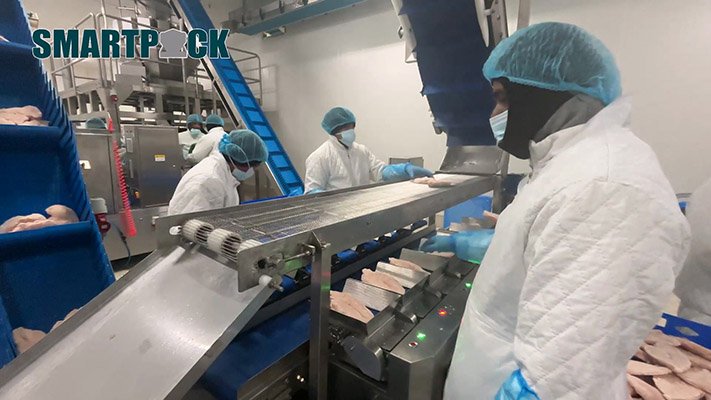
Control Moisture and Make Cleaning Practical
For Indonesian projects, we ask about room temperature, humidity, and the product condition during operation. Cold surfaces exposed to humid air can collect condensation.
We include anti-condensation provisions in the frozen-food configuration to help protect electrical components.
We also review where skin, meat fragments, ice, and meltwater can collect. Operators need access beneath belts, around guides, and at conveyor transfer points. We confirm removable parts and the approved cleaning method for each supplied machine.
Coordinate Stops and Restarts
We link upstream feeding to downstream availability. When the packaging machine runs out of pouches or stops for a film change, the line should stop sending batches into its filling area.
We also define what happens to chicken already on the conveyors. Available holding space must suit the factory’s product-handling limits.
At restart, we restore feeding in sequence so accumulated product does not rush into the weighing section at once.
What Should You Confirm Before Ordering the Line?
A quotation based only on bag weight leaves too many questions open. We need product and packaging details to propose a workable line.
We ask for representative chicken samples or videos, piece dimensions, target weights, packaging samples, required output, and the available layout. We then agree on a test that measures complete-line performance under realistic conditions.
Send Details That Affect the Configuration
We use the following information to prepare the first proposal:
| Information | Why we need it |
|---|---|
| Chicken parts and size range | Belt width and filling clearance |
| Piece weights and surface condition | Feeding and combination assessment |
| Target weight and accepted variation | Weighing setup and test criteria |
| Bag or carton samples | Opening, support, and closing requirements |
| Required output and available space | Equipment capacity and layout |
We also ask how the existing freezer or conveyor delivers chicken. Continuous discharge needs different coordination from manually emptied containers.
Agree on the Test and Installation Scope
We recommend testing representative products, including larger pieces and normal size variation. We record completed packs, weight results, blockages, and sealing or carton-filling problems during a sustained run.
We also test a stop and restart.
Smart Weigh combines China manufacturing with local Indonesian technical support. We discuss installation connections, operator training, and spare parts during planning. Send us your product video, target pack weight, and packaging sample so we can assess the configuration.
Conclusion
We match the line to your chicken parts, packaging format, and production conditions. Real product trials help confirm weighing performance and reliable filling before installation.