
A tray sealer may run fast, but the line still loses output when rice, chicken, vegetables, and sambal arrive at different times. Missing portions create rework.
We automate multi-ingredient tray filling by giving each ingredient its own portioning method, then linking every station to the same tray position and recipe. We test the complete meal at the required output before we confirm the line design.
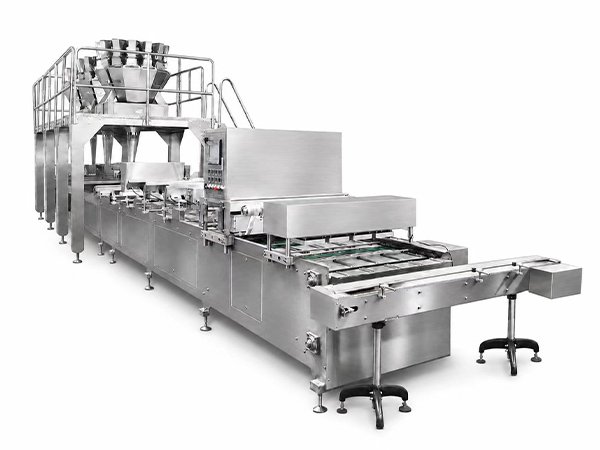
Think of a nasi ayam tray with rice, chicken, vegetables, and sambal. The work is more than placing four portions into a box. Each food moves differently, and each station must finish before the tray moves on. Here is how we would build that line for an Indonesian central kitchen or ready meal factory.
Which Ingredients Need Separate Filling Stations?
One feeder for the whole meal may look simple. Then the rice sticks, the chicken portion changes, and the sambal does not land in the right place.
We first test every ingredient as it arrives from production. We then choose weighing or dosing equipment for that food. We only premix ingredients when the recipe allows their individual amounts to vary from tray to tray.
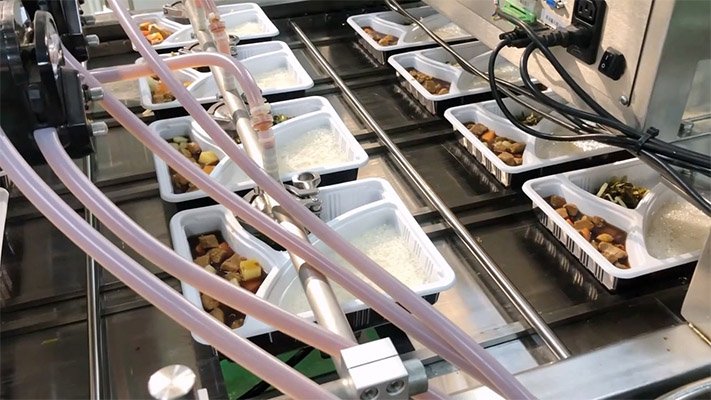
At Smart Weigh Indonesia, we ask for the actual food, not only a list of ingredients. Cooked rice behaves differently when it is warm, cooled, loose, or slightly wet. Chicken in a dry cut has a different flow from chicken covered in rendang sauce. Even the size of the vegetable pieces can change how a portion leaves a hopper. We check whether the product bridges, clings to the contact surface, breaks during transfer, or lands outside its tray compartment. A standard multihead weigher may suit pieces that separate well. Sticky rice or coated protein may need a different feeder, contact surface, and discharge design. For sambal, we look at thickness and particles before choosing a dosing method. We also run the sauce through more than one part of a batch. If chilli pieces settle or the sauce changes as the tank empties, the first good dose tells us very little about the last one. Separate stations give us control of the recipe; they also let us find which ingredient causes a delay or weight problem.
| Ingredient | What we check during a sample test | Filling approach to assess |
|---|---|---|
| Rice or noodles | Clumping, stickiness, portion release | Controlled feeding and weighing |
| Chicken or meat | Piece size, coating, product damage | Weighing with a suitable feeder and discharge |
| Vegetables | Piece mix, bruising, placement | Gentle weighing and short transfer |
| Sambal or sauce | Thickness, particles, dripping | Dosing with a suitable nozzle and cutoff |
We do not choose a machine from this table alone. We confirm the choice with the real recipe and the target portion.
How Do the Stations Fill the Right Tray at the Right Time?
A portion can be accurate on the scale and still miss the tray. One missed tray may also cause a double fill at the next station.
We register each tray at every filling point. A station releases its portion only when a tray is in position and the next movement is ready. We also define what each station must do during a stop and restart.
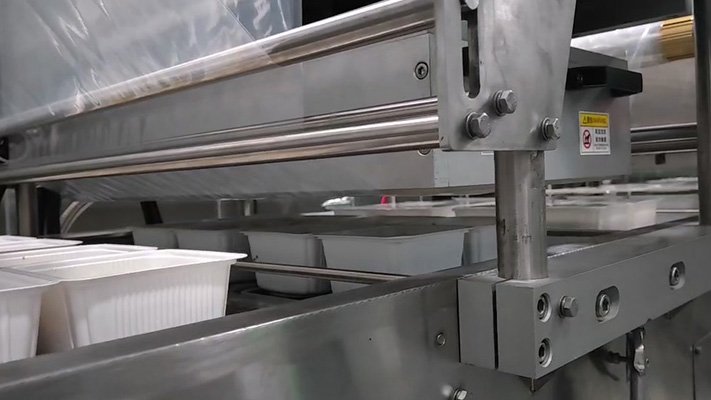
We usually start the layout with tray denesting and a clear tray pitch. We then place the solid portions in an order that makes sense for the tray. Rice may go in first so that later ingredients sit where the recipe needs them. We check this with sample trays, because a divided tray and a single-compartment tray need different chutes and fill positions. Sauce often goes in after the solids, but its nozzle must reach the food without marking the sealing flange. We keep the drop short where the appearance of chicken or vegetables matters. The controls are as important as the mechanical layout. Each station needs to know that a tray is present, that it is ready to fill, and that its portion has been released. If the tray sealer stops, we must know which trays have rice, which have chicken, and which still need sauce. We do not want a station to release a held portion twice when production starts again. For an existing line, we check these signals and the available conveyor space before we promise that a new filler can be added.
How Can We Control Each Ingredient Across Different Recipes?
A finished tray can meet its total weight and still contain too much rice and too little chicken. That is a real problem when the meal has a stated recipe.
We set a target and acceptable range for each ingredient. We save these settings by recipe, monitor the portions at their own stations, and use a final checkweigher to catch trays outside the finished weight range.
For a factory making nasi ayam on one shift and a noodle meal on the next, we prepare a recipe sheet before we program the machines. It records the tray format, fill position, ingredient targets, and the order of filling. When the operator selects another recipe, the relevant station settings must change with it. We still run trial trays after the change. A saved number cannot correct a chute that is in the wrong position or a product that is stickier than the test sample. We also keep the checks separate. The weighing or dosing station tells us what it prepared. A tray-present sensor confirms that a tray reached the position. A camera can help us spot a missing visible ingredient, but it does not tell us the exact grams of chicken. The final checkweigher measures the total filled tray. It cannot prove that the ingredient mix is correct if one excess portion hides one missing portion. If a station fails to fill, we track that tray and reject it rather than treating a good total weight as proof of a good meal.
What Speed Can the Complete Line Actually Hold?
Four machines may each have an attractive speed figure. The finished-tray output still falls when one ingredient is slow or the sealer waits for a complete tray.
We calculate portions per minute for every ingredient, then test the full line at the planned trays per minute. The slowest reliable station, tray movement, and sealing cycle determine the output we can maintain.
Suppose the target is 40 finished trays per minute. If each tray needs one rice portion, one chicken portion, one vegetable portion, and one sambal dose, each station must deliver 40 good portions per minute. The line is not running at 40 just because the sealer can accept 40 trays. If chicken can deliver only 35 usable portions per minute with the actual product, it limits the meal output. A two-tray fill may lower the cycles required at one station, but it also needs a distributor and tray positions that work together. We calculate good trays, not only machine strokes. We include product refilling, rejected trays, and the short stops that happen during a normal shift. A small buffer can help in some layouts, but we check how long a filled, unsealed meal may wait under the factory's food-handling process. For a line that already has a tray sealer, we measure its real output with the chosen tray and film. That tells us whether we need new filling equipment, a better transfer, or changes to the whole line.
What Should We Test Before Confirming the Line?
A short run with easy samples can look good. Problems often appear with the thickest sauce, the last trays in a batch, or the first restart after a stop.
We test the real ingredients, trays, and film together. We record portion results, clean tray flanges, good trays per minute, rejects, and the behaviour of the line during stops and recipe changes.
Before we quote a full system, we ask for the main recipes, target weight of each ingredient, tray drawings or samples, product condition at filling, film, and required finished-tray output. We also ask which equipment the factory wants to keep. At the factory acceptance test, we run the ingredients as a meal rather than showing four separate machines working once each. We check portion spread at every station and inspect where the food lands. We look for rice left in a chute, damaged vegetable pieces, dripping sambal, and sauce on the sealing area. Then we test an empty tray position, a product shortage, a sealer stop, and a restart. We record how many good trays the line makes over a meaningful run, not just its best one-minute result. We change to another recipe and check cleaning access and setup time. This gives the Indonesian production team a useful basis for approval. It also shows where Smart Weigh needs to adjust a feeder, chute, nozzle, control signal, or layout before delivery.
Conclusion
We start with the real food and recipe. Then we prove that every portion reaches the right tray and that the complete line holds its required output.