
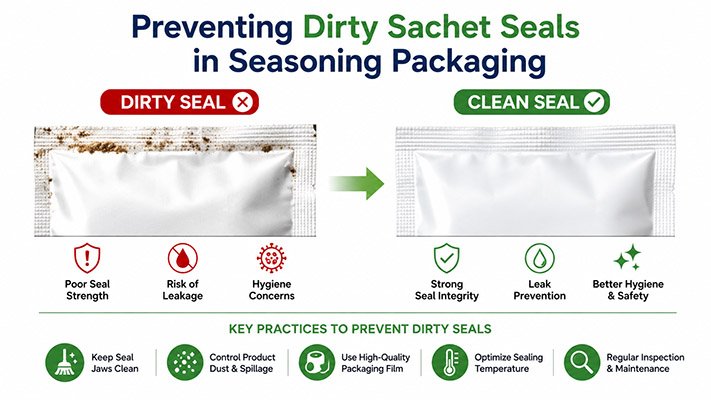
A small amount of oil or spice in the sealing area can create a weak sachet. One leaking sachet can then contaminate the noodles and outer package.
A suitable instant noodle seasoning oil packaging machine controls product discharge and keeps oil, sauce, and spice particles away from the sealing area. This design helps the machine produce cleaner seals and reduce leaking sachets.
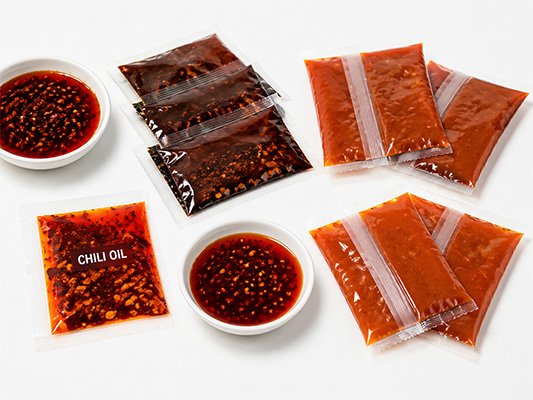
Instant noodle seasoning is not always a simple liquid. The oil may contain chili flakes, garlic, fried onion, herbs, or other spice particles. These ingredients give the product its flavor, but they also make automatic packaging more difficult.
Why Is Instant Noodle Seasoning Oil Difficult to Pack?
Seasoning oil can spread quickly across the inner film surface. Even a small drop can move into the horizontal sealing area before the sealing jaws close.
Solid ingredients create another problem. Chili flakes, garlic pieces, onion particles, and spices can become trapped between two film layers. The sealing jaws may still close, but the trapped particle can leave a small channel. The oil may then leak slowly during storage or transportation.
The ingredients may also settle inside the hopper. The first group of sachets may contain more oil, while later sachets may contain more solid particles. This problem affects flavor consistency and can also block the filling path.
Small seasoning sachets leave little space for filling errors. If the filling volume is too high, the oil remains too close to the sealing area. If the filling position is not stable, the product may touch the bag opening. The machine must therefore control the filling volume, discharge position, film movement, and sealing timing together.
Which Instant Noodle Seasonings Need Different Packaging Systems?
An instant noodle package may include several kinds of seasoning. Each seasoning requires a suitable filling method.
| Seasoning type | Common examples | Suitable filling method |
|---|---|---|
| Powder | Salt, MSG and spice powder | Auger or cup dosing |
| Seasoning oil | Garlic oil, onion oil and chili oil | Liquid filling system |
| Thick sauce | Sambal and sweet soy sauce | Sauce filling system |
| Oil or sauce with particles | Chili flakes, garlic and herbs | Particle sauce filling system |
| Dried ingredients | Vegetables and fried onion | Cup or weighing system |
One standard machine cannot handle all these products with the same filling structure. A powder sachet needs a different dosing system from a seasoning oil sachet.
The SW-SS339 is designed mainly for liquid seasoning, sticky sauce, and oil-based products with small particles. Smart Weigh Indonesia checks the product viscosity, particle size, filling volume, and required speed before confirming the machine configuration.
What Causes Dirty or Weak Sachet Seals?
Dirty seals usually come from the filling process, machine settings, packaging film, or product condition.
Uncontrolled product discharge
A fast or unstable product flow may cause the seasoning oil to splash against the inside of the sachet. The oil may then reach the sealing area.
Product dripping after filling
Some seasoning oil may remain inside the filling pipe after each cycle. The remaining product may drip while the film is moving to the next position.
Excessive filling volume
A small sachet needs enough empty space between the product and the top seal. Excessive filling reduces this safe area and increases the risk of contamination.
Incorrect operating timing
The filling action, film pulling, and sealing action must work in the correct order. Incorrect timing may allow the sealing jaws to close before the product has fully entered the sachet.
Particles inside the seal
A chili flake or garlic particle can stop the film layers from sealing completely. The sachet may look normal at first, but it may leak after pressure or movement.
Unstable sealing temperature
A low temperature may create a weak seal. A high temperature may damage the film or make the seal uneven. The correct temperature depends on the film structure and production speed.
How Does a Clean-Seal Packaging Machine Reduce These Problems?
A clean-seal system controls the product before the sealing jaws close. The system does not depend only on stronger sealing pressure.
The SW-SS339 uses a special filling design for sticky sauces and liquids with particles. The controlled discharge helps the product enter the center of the formed sachet. This design reduces splashing and keeps more distance between the product and the sealing area.
The servo film pulling system controls the bag length. A stable bag length provides the correct space for filling and sealing. The eyemark tracking system also keeps printed film in the correct position.
The machine controls the horizontal and vertical sealing temperatures independently. Its PID temperature system maintains a temperature deviation of about ±1°C. This control supports consistent seals when the machine runs continuously.
The PLC can store different production settings. The operator can save the bag length, filling volume, temperature, and operating speed for different products. Saved settings make product changes faster and reduce adjustment mistakes.
The machine frame and product-contact parts use SUS304 stainless steel. The open mechanical structure gives the operator better access during cleaning and inspection. Regular cleaning prevents old sauce and oil from affecting the next production batch.
What Should a Factory Check Before Choosing the Machine?
A factory should not select a seasoning sachet machine based only on filling volume and speed. The factory should provide actual product and packaging information.
The supplier needs to know:
- The seasoning viscosity
- The largest particle size
- The percentage of solid ingredients
- The product temperature during filling
- The required volume per sachet
- The sachet width and length
- The packaging film structure
- The required production speed
- The daily operating hours
- The connection method with the noodle line
The supplier should also check whether the particles settle quickly. A seasoning oil with heavy garlic pieces may need a mixing hopper. The mixer can help keep the particles distributed during production.
A sample test is important because two seasoning oils with the same filling volume may flow differently. Smart Weigh Indonesia can test the customer’s product to check the filling stability, seal cleanliness, bag appearance, and actual speed.
Can the SW-SS339 Pack Instant Noodle Seasoning Oil?
The SW-SS339 can pack 10–50 ml of seasoning oil, sauce, and liquid bumbu into 3-side seal sachets. The standard machine can reach 60–70 bags per minute.
| Item | Standard specification |
|---|---|
| Filling volume | 10–50 ml |
| Packing speed | 60–70 bags/min |
| Bag width | 50–100 mm |
| Bag length | 80–150 mm |
| Film thickness | 0.04–0.09 mm |
| Bag style | 3-side seal sachet |
| Machine material | SUS304 stainless steel |
| Sealing control | Independent PID temperature control |
| Power | 3-phase, 380 V, 50 Hz, 4 kW |
The actual speed depends on the sauce viscosity, particle size, filling volume, bag length, and film quality. A thick sauce with many particles may require a lower speed than a free-flowing seasoning oil.
The machine automatically completes filling, bag forming, sealing, coding, and cutting. The machine can also work with an output conveyor, date coder, checkweigher, metal detector, and other inspection equipment.
How Can the Machine Fit an Instant Noodle Production Line?
A factory can produce seasoning sachets separately before the final noodle packing process. The factory can store the finished sachets and later feed them into the main noodle packaging line. This method allows one sachet machine to support planned production for different flavors.
A factory can also connect the sachet machine with other production equipment. However, the factory must match the sachet output with the main noodle line speed.
One SW-SS339 produces up to 60–70 sachets per minute under suitable conditions. A faster noodle line may require several sachet machines, advance sachet production, or a higher-speed model. Smart Weigh Indonesia can review the required output and available factory space before designing the layout.
Can One Machine Pack Different Seasonings?
One machine may pack seasoning oil, chili sauce, sweet soy sauce, and similar liquid bumbu products. However, each product must remain within the suitable viscosity and particle range.
A major product change may require a different hopper, pump, filling pipe, or filling structure. The operator must also clean all product-contact parts when changing flavors. Proper cleaning prevents flavor mixing and allergen cross-contact.
Smart Weigh Indonesia recommends testing each main product before production. The test can confirm whether several seasonings can share one machine or need different configurations.
Conclusion
Clean seals start with controlled filling. A suitable machine must keep oil, sauce, and spice particles away from the sachet sealing area.
The SW-SS339 is designed for small 3-side seal sachets containing seasoning oil and sauces with particles. Its special filling design helps reduce dirty seals, leaking sachets, product waste, and production stops.
Send your seasoning sample, particle size, sachet drawing, and required speed to Smart Weigh Indonesia. Our team will test your product and recommend a suitable machine and production layout.