
Running a snack factory in Indonesia can be a challenging endeavor. With rising costs, stiff competition, and ever-growing demand for faster production, it can feel like you're constantly racing against the clock. If your current VFFS machine is struggling to keep up, you might have considered adding another production line. But what if one machine could effectively double your output without doubling your floor space or complexity? Enter the twin-lane VFFS machine.
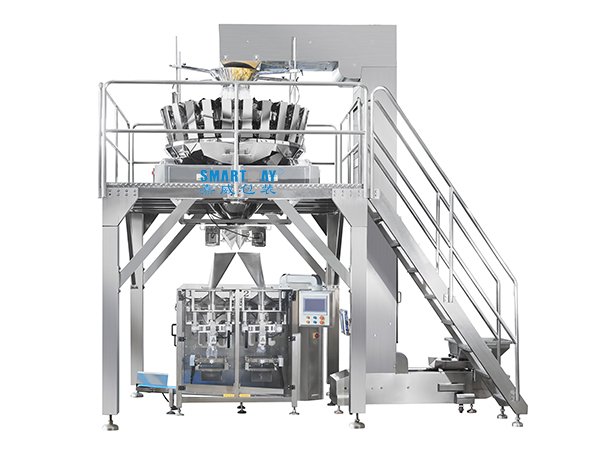
This article explores how a twin-lane solution could be the key to increasing your production capacity and efficiency without the headache of managing multiple machines.
What Exactly is a Twin-Lane VFFS?
A twin-lane VFFS machine takes the concept of traditional VFFS (Vertical Form Fill Seal) and scales it to double the output. Instead of one packaging lane running at 70 bags per minute, you get two lanes working side by side on the same machine. The system utilizes a single control unit, but the two lanes run independently, allowing for twice the output in the same amount of time.
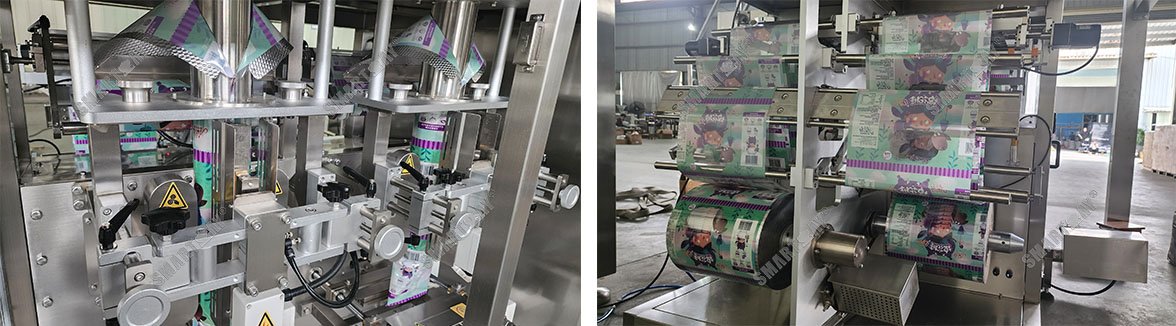
Key components of a twin-lane system:
- Twin film unwinding system
- Two forming tubes and collars
- Dual sealing jaws
- One centralized PLC control system
In essence, a twin-lane VFFS machine gives you the capacity of two machines, but with the footprint, complexity, and cost of just one.
Is This Machine Right for Your Factory?
A twin-lane machine is an investment that makes sense in certain scenarios. Here's when it's a perfect fit:
When It Makes Sense:
You Run High Volumes Daily If your factory operates for long shifts, five or six days a week, a twin-lane machine can boost your production capacity without needing additional labor. This means more output with the same team.
Your Current Machine Can't Keep Up If you're regularly running overtime or turning away orders due to insufficient production speed, a twin-lane system could provide the extra capacity you need to stay competitive.
You Want to Replace Old Equipment Upgrading from an aging VFFS machine to a twin-lane solution gives you the advantage of more output, improved efficiency, and new technology without the hassle of managing two separate machines.
Space Is Limited If your factory's space is tight and you can't accommodate two full production lines, a twin-lane solution offers a compact yet effective way to double your capacity.
When It Might Not Be Ideal:
Small Factory with Low Volumes If your production volume is low or irregular, investing in a twin-lane machine may not provide enough of a return on investment.
Frequent Product Changes If your factory switches between many different products frequently, the added complexity of setting up a twin-lane system might outweigh its benefits.
Insufficient Power Supply Make sure your factory's power supply can support the increased load of a twin-lane machine, which might require additional power compared to a single-lane version.
The Real Benefits for Indonesian Factories
1. Significant Increase in Output
Each lane on a twin-lane VFFS machine can run at 65 to 75 bags per minute, meaning the total output could range from 130 to 150 bags per minute. Over an 8-hour shift, this translates to more than 60,000 bags—a huge leap compared to a single-lane machine that might only handle 70 bags per minute.
2. Simplified Operations with One System to Manage
Running two separate machines means double the work: two control systems, two maintenance schedules, two training procedures. With twin-lane VFFS, you only need to manage one system, one software update, and one set of spare parts, simplifying maintenance and operator training.
3. Efficient Use of Floor Space
Two machines would typically require two sets of film stands, control cabinets, and additional walkways. Twin-lane systems are more compact and take up less space, which is a big deal for factories operating in crowded industrial zones.
4. Lower Total Cost of Ownership
Though the initial investment for a twin-lane machine is higher than a single-lane, over time, you save on:
- Operator costs (fewer workers required)
- Floor space (less required)
- Maintenance (one system to maintain)
- Film and consumables (bulk purchasing)
[elementor-template id="1227"]
What Can You Actually Package?
The versatility of twin-lane VFFS machines makes them ideal for a wide range of snacks:
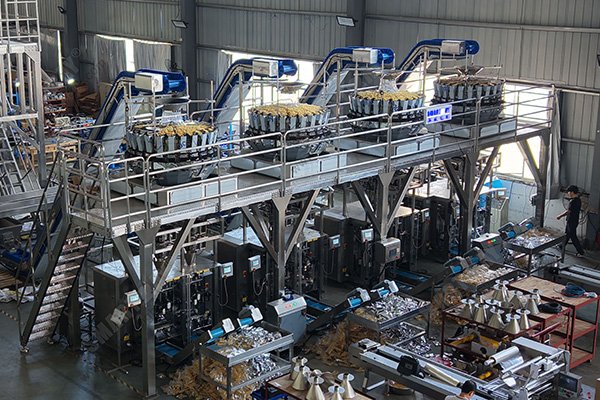
Nuts and Seeds Consistent sizes and flow make nuts like peanuts, cashews, and sunflower seeds perfect for twin-lane packaging.
Chips and Crisps Fragile items like potato chips and cassava chips are well-suited for twin-lane systems, with precise control over the packaging process.
Extruded Snacks Snacks like puffs, curls, and sticks flow efficiently and can be packaged in high volumes with ease.
Dried Fruits and Snack Mixes Twin-lane machines can handle multi-ingredient packages, though setup requires attention to detail to avoid mixing issues.
Crackers and Pellets Great for larger volumes of uniform snacks.
Considerations Before Upgrading
Before committing to a twin-lane VFFS machine, here are some key factors to consider:
1. Integration with Your Existing Line
The new machine will need to seamlessly integrate with your current production line. How will the product get to the twin-lane? Is the film unwinding system compatible? Will your current downstream equipment like checkweighers and case packers work with the new machine?
A good supplier will map out the entire flow and ensure smooth integration between all systems.
2. Film Consumption
A twin-lane machine uses more film than a single-lane, as two bags are produced at once. This means more film waste during roll changes and two seal widths to consider in your cost calculations.
3. Maintenance Requirements
With added complexity comes a greater need for maintenance. Make sure your maintenance team can handle the additional workload or confirm that the supplier provides strong local support in Indonesia.
4. Operator Training
Proper training is essential to ensure smooth operation. Look for suppliers who offer:
- On-site training in Bahasa Indonesia
- Clear written procedures
- Ongoing support to help your team get accustomed to the new system
Real Talk: What Could Go Wrong?
No machine is perfect, and the twin-lane VFFS is no exception. Here's what to watch for:
1. Film Alignment Issues
Since you're running two lanes, there's a greater chance of film tracking issues. Modern machines include auto-correction features, but some initial setup and adjustments will be necessary.
2. Increased Heat Sealing Points
With two sealing jaws instead of one, there are more potential failure points. Regular maintenance of the sealing jaws is crucial to avoid production delays.
3. Higher Initial Cost
Twin-lane VFFS machines come at a higher price point compared to single-lane systems. Be sure that your production volume justifies the investment.
Is Twin-Lane Right for Your Factory?
To determine whether a twin-lane VFFS machine is right for your factory, ask yourself:
- Do we regularly operate at or near our current machine's maximum capacity?
- Do we have enough floor space for the increased output?
- Can our power supply support a higher-capacity machine?
- Are we ready to invest in better technology for long-term gains?
If you answered "yes" to most of these questions, then a twin-lane VFFS machine could be the perfect solution for your factory.
With Indonesia's snack market becoming more competitive, production efficiency isn't just an option—it's necessary for survival. A twin-lane machine could be exactly what your factory needs to stay ahead.