
Many snack factories buy a packing machine first. Then they face slow feeding, unstable weight, weak sealing, and messy finished bag handling.
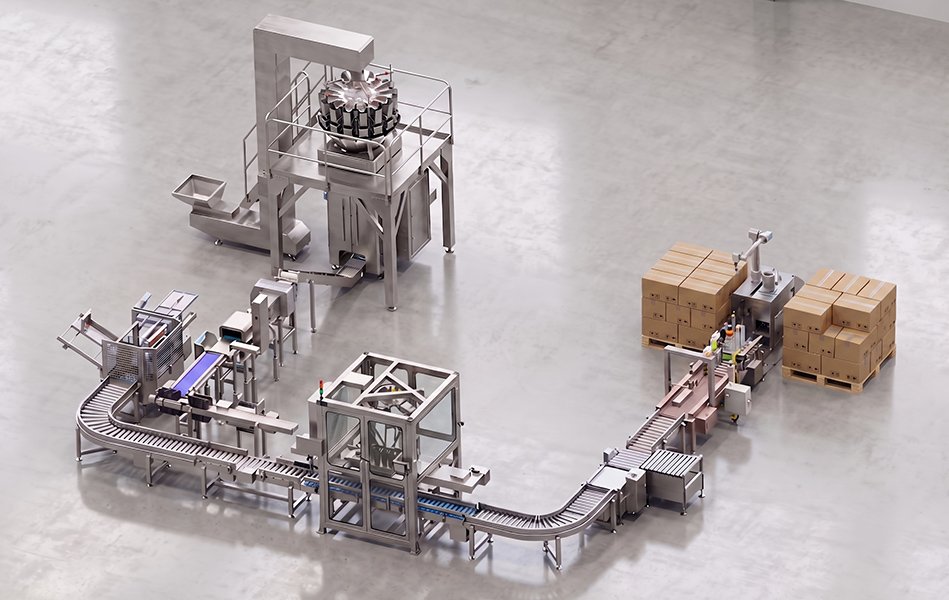
A complete snack packaging line usually needs a feeder, conveyor or elevator, multihead weigher, working platform, VFFS packing machine, date coder, nitrogen flushing system, checkweigher, metal detector, and finished product conveyor. The final setup depends on snack type, pack weight, speed target, bag size, and factory layout.
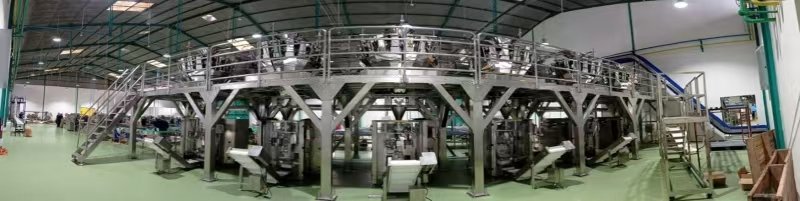
A snack packaging line should work as one connected system. The main packing machine is only one part of the line. Each machine affects the next step. If the feeder is not stable, the weigher cannot work well. If the weigher is not suitable, the packing machine may stop often. If the sealing is weak, the finished bag may leak. A complete line should move products smoothly, control weight, protect snack quality, and support daily factory operation.
What Is Included in a Complete Snack Packaging Line?
Many factories only see the main packing machine. The missing parts can create slow production, poor accuracy, and extra labor.
A complete snack packaging line moves bulk snacks into finished retail packs. It normally includes feeding, weighing, bag forming, filling, sealing, coding, inspection, and finished bag handling.
A snack packaging line starts from the product feeding area. The product may come from a processing line, cooling conveyor, storage bin, or manual loading station. The feeding machine then moves the snack to the weighing system. For many snack products, a bucket elevator, incline conveyor, or belt conveyor is used. The machine should move the product with enough speed, but it should not damage fragile snacks.
The next step is weighing. A multihead weigher is common for snacks because many snacks have irregular shapes. Keripik, chips, crackers, puffed snacks, and kacang do not flow like water. They need a weighing system that can combine different portions and reach the target weight fast.
After weighing, the product drops into the VFFS packing machine. The VFFS machine forms the bag from roll film. It fills the snack, seals the bag, and cuts it into finished packs. Extra systems can be added based on the product need. Nitrogen flushing can help crispy snacks stay fresh. A date coder prints production data. A checkweigher checks pack weight. A metal detector supports food safety control. A finished product conveyor moves bags to the collection or carton area.
| Process Step | Machine Used | Main Function |
|---|---|---|
| Product feeding | Belt conveyor, incline conveyor, or bucket elevator | Moves snacks to the weighing machine |
| Weighing | Multihead weigher or linear weigher | Controls target pack weight |
| Packing | VFFS packing machine | Forms, fills, seals, and cuts bags |
| Freshness control | Nitrogen flushing system | Helps protect crispy snacks |
| Coding | Date coder or printer | Prints date, batch, or expiry information |
| Inspection | Checkweigher and metal detector | Checks weight and contamination risk |
| Output | Finished product conveyor or rotary table | Moves packed bags to the next step |
For Indonesian snack factories, this full-line view is important. A keripik singkong factory may need gentle feeding. A kacang factory may need higher speed and strong weighing accuracy. A puffed snack factory may need a larger-volume system. A spicy snack factory may need easier cleaning because oil and seasoning powder can build up on contact parts.
Why Do Feeding and Weighing Machines Decide Line Stability?
Snacks can break, bridge, stick, or flow unevenly. If feeding and weighing are unstable, the full packaging line becomes unstable.
Feeding machines move snacks into the weigher. Weighing machines control each pack weight. These two steps decide accuracy, speed, breakage level, and product giveaway.
The feeding system should match the snack. It should not be selected only by price or machine size. Keripik and chips need soft handling because they break easily. Puffed snacks need larger product volume because the weight is low but the bag is full. Kacang and small granular snacks can usually run faster because they are stronger and flow better. Spicy coated snacks may need easy-clean surfaces because oil and seasoning can collect on the machine.
A bucket elevator is often used when the line needs vertical feeding to a multihead weigher. A belt conveyor can be useful for gentle transfer. A vibratory feeder can help spread products evenly. The wrong feeder can cause three problems. It can damage products. It can feed too much or too little product. It can make the weigher wait, so the packing machine cannot reach its real speed.
The weighing machine is just as important. Many snack factories use a multihead weigher because it can combine different small portions into one accurate target weight. This is useful for irregular products. It can also reduce giveaway. Giveaway means extra product inside the bag beyond the target weight. A small giveaway may look harmless, but it becomes a large cost when the factory packs thousands of bags per day.
| Snack Type | Feeding Requirement | Weighing Choice | Main Concern |
|---|---|---|---|
| Keripik singkong | Gentle bucket or belt feeding | Multihead weigher | Breakage control |
| Keripik pisang | Low-impact transfer | Multihead weigher | Product damage |
| Kacang | Stable and fast feeding | Multihead weigher | Speed and accuracy |
| Puffed snacks | Large-volume feeding | Large-volume multihead weigher | Low weight and high volume |
| Spicy snacks | Easy-clean contact parts | Multihead weigher | Oil and seasoning powder |
| Crackers | Controlled product flow | Multihead or linear weigher | Size and speed |
Product testing should be done before the final machine model is confirmed. The test should check product size, product weight, target bag weight, real speed, and breakage risk. This step reduces wrong machine selection. It also helps the factory understand the real output speed before installation.
How Does the VFFS Machine Pack Snacks Into Retail Bags?
A snack line cannot make stable retail packs without the right bag forming and sealing system. Poor sealing can damage brand trust.
A VFFS packing machine forms bags from roll film, receives weighed snacks, fills the bag, seals it, and cuts it into finished packs.
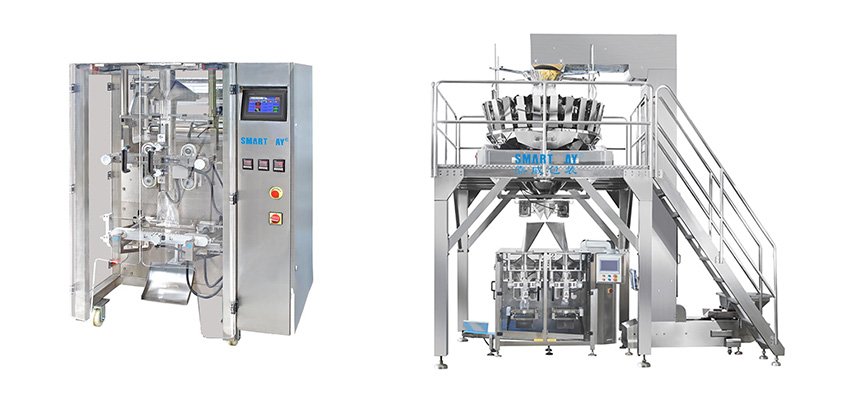
VFFS means vertical form fill seal. The machine pulls roll film, shapes it around a forming tube, makes a vertical seal, fills the snack, makes the top and bottom seals, and cuts the bag. This system is widely used for snacks because it can handle many retail pack sizes. It can make pillow bags, gusset bags, and chain bags. The final bag style depends on the film, forming tube, sealing jaw, and cutting system.
The VFFS machine must match the product volume. This point is very important for snacks. A 30 g pack of puffed snacks may need a bigger bag than a 100 g pack of kacang. The product weight is not the only factor. The product volume and bulk density also decide the bag size. If the bag is too small, the product may get stuck in the forming tube. If the bag is too large, the finished pack may look empty or soft.
Sealing is another key point. Fried snacks, spicy snacks, and powder-coated snacks can leave oil or seasoning dust near the sealing area. If product particles are caught in the seal, the bag may leak. Good machine adjustment, stable film tension, correct sealing temperature, and proper product drop timing can reduce this risk.
| Bag Type | Suitable Snack Products | Common Use |
|---|---|---|
| Pillow bag | Chips, keripik, kacang, crackers | Standard retail snack packs |
| Gusset bag | Larger snack packs | Better shelf shape |
| Chain bag | Small snack sachets | Promo packs or multi-pack use |
The VFFS machine should not be evaluated only by its maximum speed. Real speed depends on product flow, bag size, sealing time, film quality, and the weighing system above it. A machine may run fast with empty bags, but it may run slower with bulky or fragile snacks. This is normal. A practical quotation should show the expected speed for the real snack product, not only the mechanical maximum.
When Are Nitrogen Flushing, Coding, and Inspection Machines Needed?
Some factories pack snacks quickly but still face complaints. The problems often come from freshness, missing codes, wrong weight, or contamination risk.
Nitrogen flushing, coding, checkweighing, and metal detection support product quality after the snack enters the bag. These systems help improve shelf life, traceability, weight control, and food safety.
Nitrogen flushing is common for crispy snacks. Potato chips, puffed snacks, fried snacks, keripik, and similar products often need better protection from oxygen. Nitrogen can reduce oxygen inside the bag. It can also create a cushion effect, so the snack has less direct pressure during handling and transport. This is useful for products that must stay crispy and have a good shelf appearance.
Nitrogen flushing does not solve every problem. The film must be suitable. The sealing system must be stable. The nitrogen supply must be consistent. The bag must hold gas well enough for the shelf-life target. If the seal is weak, nitrogen will escape. If the product is too oily or the sealing area is dirty, leakage risk will still exist.
Coding machines are also important. A snack bag often needs production date, expiry date, batch number, or other factory information. A thermal transfer printer is often used on flexible film. An inkjet printer can also be used in some layouts. The coding position should be planned before the film design is finalized. If the code is placed in the wrong area, it may be hard to read or easy to damage.
Inspection machines are usually placed after the VFFS machine. A checkweigher rejects underweight and overweight bags. Underweight packs can create customer complaints and retail risk. Overweight packs create giveaway and reduce margin. A metal detector checks metal contamination risk. This is part of a stronger food safety system.
| Machine | Main Function | When It Is Needed |
|---|---|---|
| Nitrogen flushing system | Reduces oxygen inside the bag | Crispy, fried, or puffed snacks |
| Date coder | Prints date and batch information | Most retail snack packs |
| Checkweigher | Rejects underweight or overweight bags | Factories that need stronger weight control |
| Metal detector | Checks metal contamination risk | Food safety control and retail supply |
| Reject system | Removes failed packs | Lines with inspection machines |
These machines help a snack factory move from simple packing to controlled production. Speed is important, but control is also important. A line that packs fast but produces leaking bags, unclear dates, or unstable weights will still create hidden costs.
How Should Finished Bag Handling Be Planned?
The packing process does not end at sealing. If finished bags pile up or fall badly, the line still loses efficiency.
Finished bag handling moves packed snacks from the VFFS machine to collection, inspection, carton packing, or storage. The setup should match the line speed and labor plan.
After the snack bag leaves the VFFS machine, it needs a clear path. A finished product conveyor can move bags away from the machine. A rotary collecting table can hold bags for manual carton packing. A takeaway conveyor can move bags to another inspection point or packing table. Larger factories may add a carton sealing machine, case packer, or palletizing system.
This part is often ignored during early planning. It should not be ignored. If the VFFS machine runs 60 bags per minute but the collection table is too small, operators will stop the line often. If bags fall from a high point, chips may break after packing. If the carton packing area is too close to the machine, operators may not have enough space to work safely.
Small and medium snack factories can start with a simple output system. A conveyor and manual carton packing area may be enough. This setup reduces investment and keeps operation flexible. As output grows, the factory can add a rotary table, carton sealer, automatic case packing, or other end-of-line machines.
| Factory Stage | End-of-Line Setup | Suitable Situation |
|---|---|---|
| Growing snack factory | Finished conveyor + manual carton packing | Lower investment and flexible operation |
| Medium factory | Conveyor + rotary table + carton sealer | Better product flow and easier packing |
| Large factory | Automatic case packing system | Higher speed and lower manual handling |
| Export-focused factory | Checkweigher + metal detector + carton system | Stronger quality control and traceability |
The finished bag handling area should also allow maintenance access. Operators need space to clear jams, collect rejects, change film, clean the machine, and move cartons. A compact layout can save space, but it should not block daily work. Good layout design can make the same machine run more smoothly.
How Can Indonesian Snack Factories Choose the Right Line Configuration?
A standard machine list may look simple. The wrong configuration can still cause broken snacks, low speed, and high maintenance pressure.
The right snack packaging line depends on product type, target pack weight, required speed, bag size, nitrogen needs, factory space, and local technical support.
Snack products are different, so the line setup should also be different. Keripik singkong needs gentle feeding and good breakage control. Kacang needs strong speed and weighing accuracy. Puffed snacks need large-volume handling because the product is light but bulky. Spicy snacks need easy-clean contact parts because oil and seasoning powder can affect the sealing area and machine surface.
Before a factory buys a snack packaging line, the basic production information should be clear. The supplier should know the product name, product size, target pack weight, bag width, bag length, expected speed, film type, and factory layout. The factory should also confirm whether nitrogen flushing is needed. Space and ceiling height should be checked early because a multihead weigher and platform need height.
| Question | Why It Matters |
|---|---|
| What snack will be packed? | Product size and shape affect feeding and weighing |
| What is the target pack weight? | The weigher and bag size depend on it |
| What speed is required? | The full line must match the target output |
| Is the snack fragile? | Feeding height and machine design must reduce breakage |
| Is nitrogen flushing required? | Film, sealing, and gas supply must be prepared |
| How much factory space is available? | Line layout depends on floor area and ceiling height |
| Is local service available? | Downtime risk depends on technical support and spare parts |
A practical configuration can look like this:
| Product | Practical Line Setup | Main Focus |
|---|---|---|
| Keripik singkong | Z bucket elevator + multihead weigher + VFFS + nitrogen + checkweigher | Reduce breakage and keep product crispy |
| Kacang | Bucket elevator + multihead weigher + VFFS + coder + checkweigher | Speed and weight accuracy |
| Puffed snacks | Large-volume weigher + VFFS + nitrogen + finished conveyor | Handle bulky product volume |
| Spicy snacks | Easy-clean conveyor + multihead weigher + VFFS + coder | Manage oil and seasoning dust |
| Banana chips | Gentle feeding + multihead weigher + VFFS + inspection | Reduce broken chips |
Buyers should also avoid common mistakes. A very cheap machine may look attractive, but it may not match the real product. A weigher that is too small can limit the whole line. A poor feeding system can break fragile snacks before they even reach the bag. A line without local service can create long downtime when the factory needs help.
We support Indonesian snack manufacturers with full-line planning, machine selection, and local technical service. Smart Weigh Indonesia combines China-headquarters manufacturing with local Indonesian support. This setup helps factories compare machine cost, production stability, and service response together. For snack manufacturers, the goal is not only to buy machines. The goal is to build a packaging line that can run every day with stable weight, good sealing, clean coding, and controlled output.
Conclusion
A complete snack packaging line needs feeding, weighing, packing, freshness control, coding, inspection, and finished bag handling. The best setup should match the snack, speed, space, and service needs.