
Many Indonesian snack factories still rely on manual labor—workers weighing, filling, sealing, and stacking products by hand. This method worked when production volumes were low, but as your orders grow and competition intensifies, the limitations of manual processes become clear.
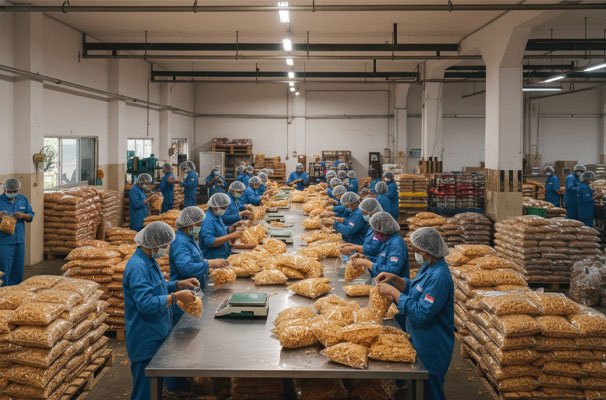
If your factory is reaching the tipping point where manual labor no longer suffices, this guide is for you. Let's explore how to smoothly transition from manual to automated packing, without the drama.
Signs It's Time to Consider Automation
How do you know when it's time to move from manual to automated processes? Look for these signs:
1. Labor Costs Are Eating Your Profit
When you're paying 10+ workers just for packaging, and overtime is constant, automation starts making financial sense. While machines require an upfront investment, they don't need monthly salaries, bonuses, or time off.
2. Quality Is Inconsistent
If you're getting complaints about underweight packages or weak seals, inconsistent manual work could be to blame. Automation ensures consistent quality—every package is the same weight with proper sealing every time.
3. You Can't Meet Demand
Turning away orders is painful. If you're saying "we can't meet that volume," you're missing opportunities. Automated lines can achieve in one hour what manual labor does in a whole day.
4. Competitors Are Upgrading
If your competitors are investing in automation, they can reduce prices and speed up lead times. They're winning contracts, offering more competitive prices, and delivering faster. Don't fall behind.
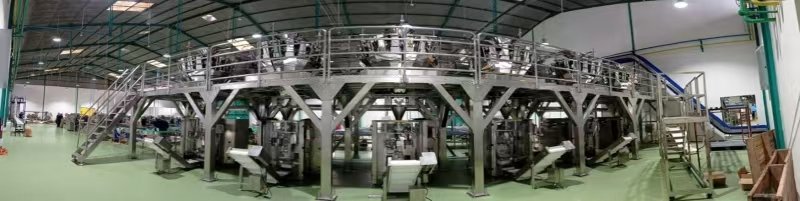
The Upgrade Journey: Step by Step
Step 1: Assess Your Current Situation
Before diving into purchasing equipment, evaluate your current setup:
- What's your current output (bags per hour)?
- What's your target output in the next 2-3 years?
- What's your budget?
- What are your biggest pain points? (e.g., speed, quality, labor issues)
This honest assessment lays the foundation for making informed decisions.
Step 2: Understand Your Product
Different snacks have different packaging needs:
- Nuts: Require accuracy and smooth flow.
- Chips: Need gentle handling to prevent breakage.
- Mixed products: Demand intelligent weighing.
- Powder/seasoning: Need special feeders for uniform distribution.
Choosing the right machine depends on what you're packaging. A supplier who understands your product's needs will recommend the best equipment.
Step 3: Choose Your Equipment
Based on your assessment, here's a breakdown of what you might need:
- Entry-level: Single VFFS + basic weigher
- Mid-range: VFFS + multihead weigher + checkweigher
- Full line: Weigher + VFFS + metal detector + checkweigher + case packer
Start with what fits your budget and scale. You can always add more equipment later.
Step 4: Plan the Integration
Avoid surprises during installation:
- Does your electrical supply support the new equipment? (380V 3-phase is common)
- Do you need compressed air?
- Where will the machine fit? (Measure twice, buy once)
- How will the product flow from one machine to another?
A good supplier will help you map out the full integration plan. If they're only selling and not consulting, be cautious.
Step 5: Install and Train
This is where the magic happens:
- Professional installation (usually 3-7 days)
- Operator training in Bahasa Indonesia
- Technician training on basic maintenance
- Test runs with your actual product
There's a learning curve, but your team will get comfortable with the equipment within 1-2 weeks.
Addressing Common Concerns
"My workers will lose their jobs"
Automation can reduce the number of workers needed for repetitive tasks, but it doesn't eliminate jobs. Workers often transition into roles like:
- Quality control
- Machine monitoring
- Material handling
- Shipping and receiving
- Setup and changeover
Most factories that upgrade don't reduce headcount; they redeploy workers to higher-value tasks, often hiring more as production increases.
"New machines are too complicated"
Modern equipment is designed to be user-friendly:
- Touchscreen interfaces in Bahasa Indonesia
- Recipe storage for easy settings recall
- Clear error messages when something goes wrong
- Remote diagnostics for tech support
While there's a learning curve, most operators are comfortable within 1-2 weeks.
"The cost is too high"
Let's break it down:
Manual Line (Example):
- 10 workers × Rp 2.5M/month = Rp 25M/month in labor
- Plus overtime, benefits, and training
- Plus inconsistent quality and waste
Automated Line:
- One-time investment: Rp 400-800M
- 3-5 workers to run it
- ROI typically within 12-18 months
- Better quality, faster output, scalability
It's an investment, not an expense. The numbers typically work out in your favor.
What to Expect After Automation
Higher Output, Same Team
With automation, your existing team becomes more productive. One operator can monitor what previously required three workers.
Consistent Quality
Automation ensures every bag is the same weight, with the same seal. The consistency in your product will improve significantly.
Better Data
Modern machines track performance—bags per minute, weight accuracy, downtime—so you can manage based on real-time data.
Scalability
With manual labor, you need more workers to double output. With automation, you might only need longer shifts or slight upgrades to meet increased demand.
Support Available in Indonesia
One of the key benefits of working with a local supplier is the support they offer:
- Local Technicians: Suppliers with technicians in Indonesia can often respond on the same day or the next day when something goes wrong.
- Spare Parts in Stock: Local suppliers typically keep common parts in warehouses in Jakarta or Surabaya, so you won't have to wait weeks for replacements.
- Training in Bahasa Indonesia: Training in the local language ensures that your operators understand the process better and work more efficiently.
- Understanding Local Conditions: Local suppliers know the unique challenges of Indonesian factories, such as humidity, power fluctuations, and specific snack types.
Taking the First Step
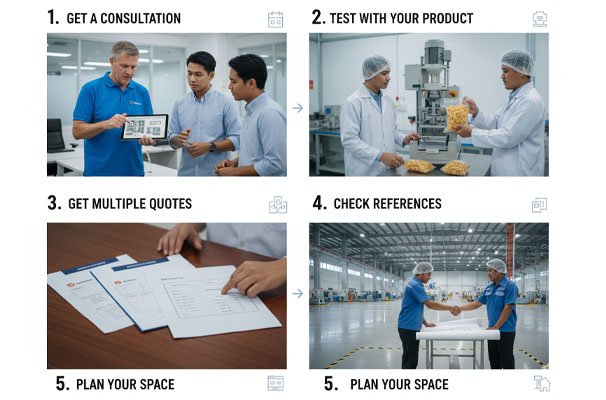
If you're considering automation, here's your action plan:
- Get a consultation – Many suppliers offer free site visits and assessments.
- Test with your product – Run your snack through the equipment if possible.
- Get multiple quotes – Compare different options, but remember that cheaper isn't always better.
- Check references – Speak with other Indonesian factories using the same equipment.
- Plan your space – Make sure you have enough room for the new equipment.
Upgrading from manual to automated packing is a significant step, but for factories ready to grow, it can be the difference between surviving and thriving in Indonesia's competitive snack market.