
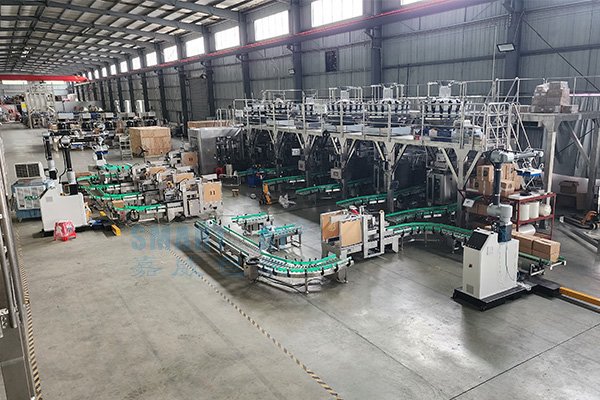
As the snack industry grows, many factories face the challenge of scaling production to meet rising demand. Expanding from one packing line to multiple lines requires careful planning, investment, and integration of efficient systems. Packing automation plays a key role in ensuring a smooth transition, helping factories scale quickly while maintaining high standards of quality and operational efficiency. In this article, we will explore the benefits of scaling with automation, the common challenges, and how Smart Weigh’s solutions can help snack manufacturers expand their production lines seamlessly.
The Benefits of Scaling from One Line to Multiple Lines
Increased Production Capacity Without Sacrificing Quality
When scaling production, the primary goal is often to boost output without compromising product consistency. Automation helps factories achieve this by improving speed while maintaining precision. This leads to higher volumes and reduced product giveaway, enhancing overall efficiency.
Improved Flexibility in Handling Diverse SKUs
Snack manufacturers typically deal with a wide variety of SKUs, from small snack bags to larger family-sized packs. Automation systems provide the flexibility to handle different packaging formats quickly and efficiently, ensuring smooth transitions between SKUs. This adaptability is crucial in a dynamic market.
Staying Competitive in a Growing Market
In rapidly growing markets, such as Southeast Asia, snack factories must remain competitive by scaling production efficiently. Automation helps meet growing demand, reduce lead times, and maintain high quality, ensuring factories stay ahead of the competition.
Common Challenges in Expanding Packing Lines
As snack factories expand their operations, they face several challenges that can impact efficiency and product quality. Automation provides solutions to these challenges, ensuring smooth scaling and seamless integration across multiple packing lines. Below is a table highlighting the common challenges in factory expansion and how automation helps address them:
| Challenge | How Automation Helps |
|---|---|
| Balancing Increased Throughput with Consistent Quality | Automation ensures that packing lines run at optimal speeds while maintaining product quality. Weighing systems, filling machines, and sealing technology help minimize defects. |
| Space Constraints and Factory Layout Optimization | Automated systems optimize factory layouts by reducing manual labor and streamlining workflows. Modular solutions allow gradual expansion without major structural changes. |
| Coordinating Multiple Lines Efficiently | Automation integrates the entire production process, offering centralized control and real-time monitoring, ensuring all lines operate efficiently without disruptions. |
| Labor Requirements and Skill Gaps | Automation systems are designed with user-friendly interfaces, reducing the need for extensive training and enabling smoother integration with existing teams. |
Key Features to Consider When Expanding with Automation
When scaling up with automation, several key features should be considered to ensure success.
Choosing the Right Packaging Machines
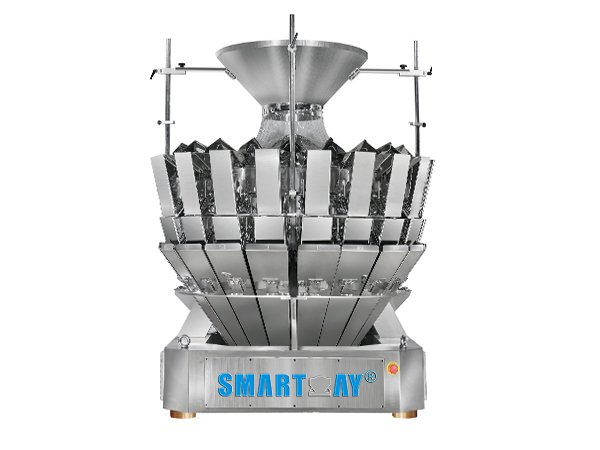
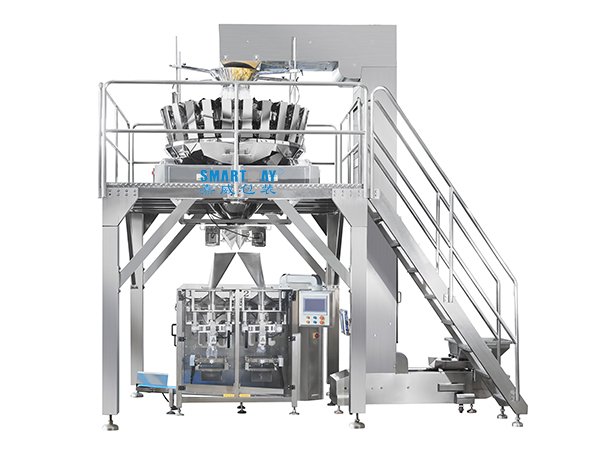
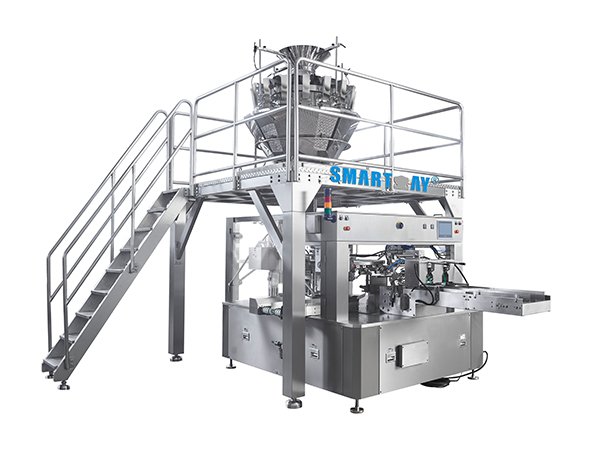
When expanding production, selecting the right packaging machine is essential. For pillow bags, a high-speed multihead weigher VFFS machine or a duplex VFFS with twin discharge and multihead weighers are excellent choices. For premade pouches, a dual 8-station rotary pouch packing machine with twin discharge multihead weighers can handle the necessary speeds and flexibility.
Precision Weighing Systems
Multihead weighers are crucial for ensuring accuracy and consistency in portioning. As factories scale up, automated weighing systems become even more important to minimize giveaway and ensure product uniformity. These systems help reduce waste, which can lead to significant cost savings as production increases.
Flexibility in Packaging Formats
Snack factories often deal with multiple packaging formats, from small bags to jars and pouches. Automated systems provide the flexibility needed to handle various packaging types, enabling factories to scale without being limited by packaging constraints.
Smart Packaging for Traceability and Compliance
Automated packing systems that include smart packaging features like vision systems, barcode scanning, and automated labeling help factories maintain traceability and comply with industry regulations. These features improve product visibility, ensure correct labeling, and enhance overall operational transparency.
Smart Weigh Solutions for Expanding Snack Factories
Smart Weigh provides tailored automation solutions to help snack factories scale efficiently, offering systems designed to handle different packaging formats and speeds. Below is an overview of the solutions offered by Smart Weigh for expanding snack packing lines.
For Pillow Bags
| Solution | Output Capacity | Key Features |
|---|---|---|
| High-Speed Multihead Weigher VFFS Machine | 80–120 packs/min | 2 or 4 servo motors, 16 or 20-head multihead weigher |
| Duplex VFFS with Twin Discharge Weigher | 75x2 bags/min | 20/24-head weigher, dual discharge for increased capacity |
For Premade Pouches
| Solution | Output Capacity | Key Features |
|---|---|---|
| Dual 8-Station Rotary Pouch Packing Machine | 80 pouches/min | Twin discharge multihead weigher, high flexibility for pouch sizes |
These solutions ensure that snack manufacturers can meet growing demands while maintaining speed, accuracy, and flexibility.
How Packing Automation Supports Factory Expansion
Packing automation is essential for snack factories looking to scale efficiently, reduce costs, and improve quality.
Scalable Modular Systems
Modular automation systems are flexible and scalable, allowing factories to add new lines as needed. This approach enables factories to expand without large upfront investments or major operational disruptions.
| Feature | Benefit |
|---|---|
| Modular Systems | Allow gradual line expansions without disrupting existing operations |
| Flexible Integration | Easy integration into current production setups, minimizing downtime |
Reduced Reliance on Manual Labor
Manual labor is often a bottleneck in snack packing lines. Automation reduces reliance on human labor, increasing efficiency and reducing the risk of errors that can lead to waste and defects.
Seamless Integration of Multiple Lines
With multiple packing lines, synchronization becomes critical. Automation provides centralized control systems, allowing managers to monitor and control all lines efficiently.
Standardizing Quality Across Shifts and Lines
Automation ensures consistent quality across multiple shifts and packing lines, reducing variability and maintaining product standards.
Final Thoughts
Expanding a snack factory from one packing line to multiple lines presents unique challenges, but automation provides a straightforward solution. By implementing automated systems, snack manufacturers can scale production efficiently, improve product consistency, and reduce costs. Smart Weigh’s flexible and customizable automation solutions help factories meet rising demand while maintaining quality and operational efficiency. With the right automated systems in place, snack factories can successfully expand their operations and stay competitive in an ever-growing market.